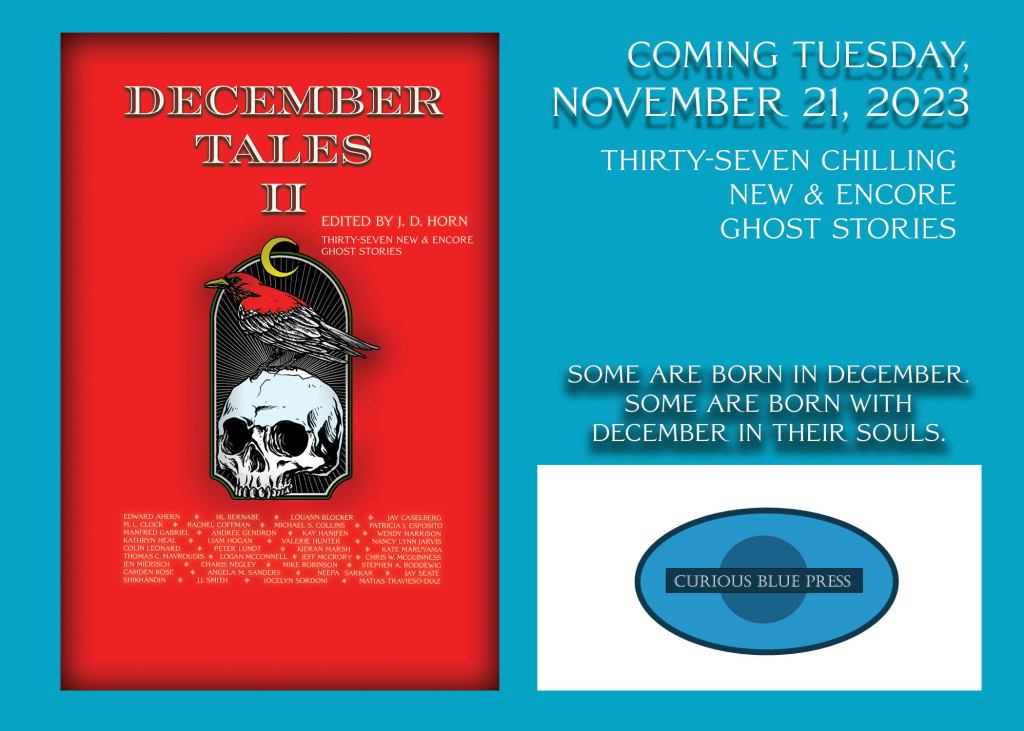
Nothing makes a horror writer smile quite so big as having a new story published on Friday the 13th! 🎃
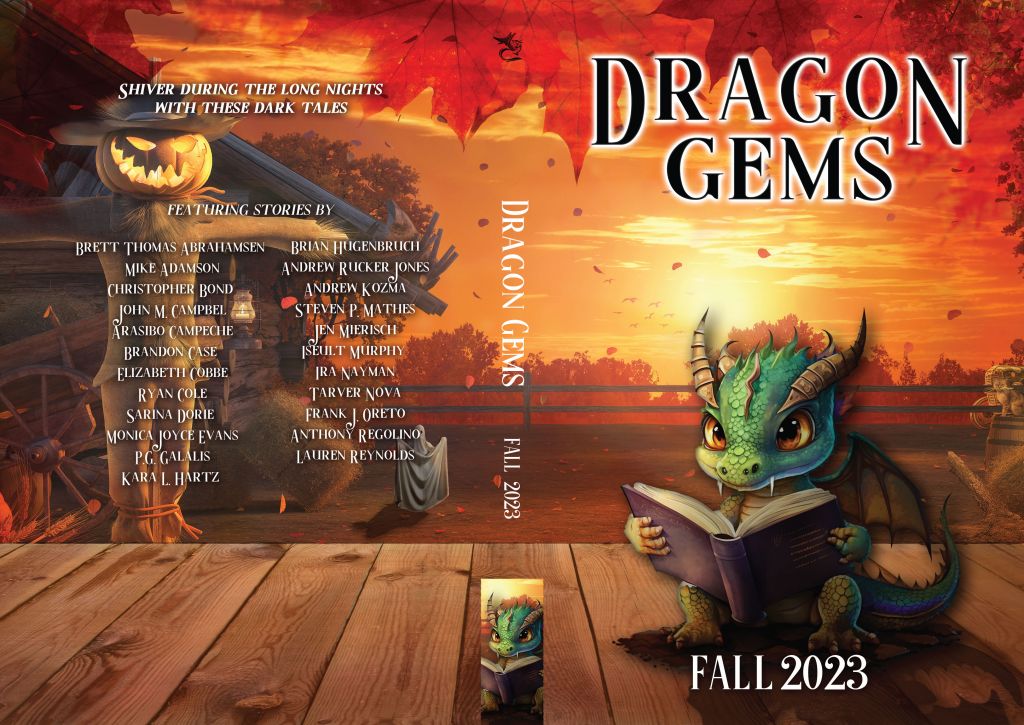
Check out Water Dragon Publishing’s new collection of dark stories, Dragon Gems Fall 2023, edited by Christine Morgan, and featuring my story “The Cutoff.” The link takes you to a page with options to buy the book in paperback, hardcover, or ebook.
I’m just getting into my author copy, but the stories look to be lots of spooky fun with a bit of humor too! The collection is a mix of science fiction, horror, and fantasy.
And no, the stories are NOT all about dragons. Although I do like the idea of this cute little guy reading my story. And then maybe roasting and eating the book afterward, just because he can.
Tonight I attended Pitchapalooza, and whoo-eee, what a ride!
Pitchapalooza is an online event where the hosts choose 20 writers out of a hat and each writer gets 60 seconds to pitch their book. It’s run by authors Arielle Eckstut and David Henry Sterry, also known as “The Book Doctors” and the creators of America’s Next Great Author.
Billed as “American Idol for Books,” the event is aptly named, since each author gets a limited time to impress the judges, with instant feedback. Fortunately for us writers, Arielle and David are much nicer than Simon Cowell!
Well, that four-leaf clover I found this summer must have paid off, because they chose me to pitch my novel-in-progress. I raced through the 200-ish words that I’d written an hour before, and I brought it in right at the buzzer. Although I didn’t win (congrats Hannah Jackson), both the judges and audience seemed to like my pitch, and the judges’ feedback was absolutely spot-on. It was incredibly nerve-wracking, but I’m so glad I did it. I’m still on an adrenaline high several hours later!
I highly recommend every aspiring book author attend one of these events. If you get selected to pitch, it is great practice, and even if you don’t, you learn so much from watching other people’s pitches and the judges’ critiques. Some tips they offered at the event:
Delivery is important. Be lively; don’t read in a monotone. The pitch is your audition, and your unique voice needs to shine through. Tell that story like you were telling it to your buddy at the coffee shop or the bar.
Structure the pitch well. Make it clear as early as possible whether it’s fiction, nonfiction, a story collection, a memoir, etc. Outline most of the plot, but not all of it. Leave them wanting more.
Practice. Video record yourself reading your pitch. Play it back to find areas that could be stronger.
Yesterday my horror story, Roots, went live. If you like campy horror reminiscent of the 1980s TV series Amazing Stories, you’ll like this one.
It’s part of the “Two Thousand Word Terrors” series by Rooster Republic, and I’m delighted to be working with them.
This story began life four years ago as a screenplay that I entered into NYC Midnight‘s Short Screenplay Challenge. I decided it would make a fun short story, so I expanded it. I’m pleased with the result, which is seasoned with plant horror, aliens, and 1980s nostalgia.
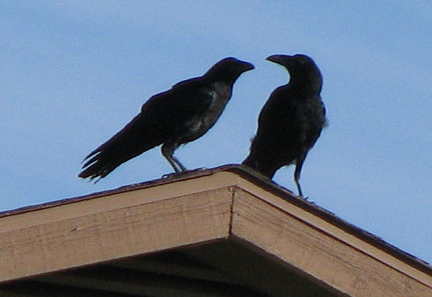
One crow sorrow, Two crows mirth, three, a wedding, four, a birth, five brings silver, six takes wealth, seven crows a secret, more I can nae tell.
This week I did my first-ever author interview with Luna Station Quarterly, an online magazine that recently published my story Jane and the Crows.
Jane and the Crows is a dark fairy tale that I originally wrote for a contest in 2019. It did not do well in the contest. In fact, it knocked me out in the first round. But there was something about it I liked. So I went back to it several times over the years to expand and revise it before it eventually found a home at LSQ.
It was a lot of fun to revisit that story for this interview. It was my first attempt at writing a fairy tale (I’ve since written several others). They’re one of my favorite types of story to write. I love the way they combine elements of humor, horror, and fantasy.
LSQ’s interview questions are very in-depth. They plumb the story’s characters, plot, and themes. I had never analyzed one of my own stories like that before. It felt kind of like dissection (which I love! former biology major here), and, at the same time, like hanging out with old friends (Jane and John).
Who says ghost stories have to be dark and sinister? I say they can be funny!
My latest micro story, “Driving Me Mad,” appears this week on White Enso’s “Hyakumonogatari Kaidankai: 100 Days, 100 Supernatural Stories.”
For the first time ever, I offer you two formats: print and audio! In addition to publishing the stories in print form, editor Linda Gould has also made them available as a podcast.
Love horror? Got a busy life with very little time to read?
Horror microfiction might be just what the reaper… ahem, doctor… ordered!
With Halloween just around the corner, it’s the perfect time to grab a copy of the 666 Dark Drabbles anthology, released this week from Black Hare Press.
I’m delighted to have my story “Played Out” included in this collection.
My first-ever published story was microfiction, which is defined as a a very, very short story. How short? Generally 500 words or less.
I am now up to 10 published microfiction stories, with several more due out over the next few months. Check out my latest stories below!
Bad Kitty (Storytwigs, August 2021) A cat ruins a party in this tale of accidental terror.
In Concert (100-Word Fiction, July 2021) A pianist turns a birth defect into a fame-maker.
Exposing the Truth (Instant Noodles, July 2021) A diver shows off more than just her backflip.
I joke that I’ve had so much success with microfiction because I don’t have time to write anything longer. When you have two young kids and a full-time day job, the struggle to find writing time is real!
But the truth is, I enjoy micro for its own sake. It’s a fun challenge to squeeze a whole story into a tiny word count. It’s great for readers, too, especially ones who read on their smartphone in five-minute chunks while waiting at the dentist’s office or in line at the grocery store.
Readers, what books or stories did you love this summer?
In this modern world, could you survive without computers for an entire day?
My very own mom asked me that question when she read my latest story, Technically Speaking. My response? “Yes. If I were off in the woods. In my house it would be difficult!” Our home is pretty gadget-heavy, with at least a dozen devices connected to the wi-fi at any given time. Little House on the Prairie, we ain’t.
In the story, a couple bets each other that they can’t go a whole day without looking at a screen. The winner will choose the couple’s next vacation; the loser will pay for the trip. The stakes are high, and so is the difficulty, when they realize how dependent they are on devices.
There’s a lot of me and my husband in this story. He’s the gadget guy; I’m the Luddite who pooh-poohs new gadgets at first, until I realize how extremely freakin’ useful they are. Honey, I may have to be dragged into new technology sometimes, but I’m grateful to you for keeping me up to date. Without you, I might still have a flip phone and a mobile plan that charges for each text message.
Thanks, Fiction on the Web, for awarding the story “Pick of the Month”!
Are you annoyed by people who refuse to wear masks during a pandemic, but still want their surgeons and dentists wearing masks? So is Asclepius, the God of Science, and he’s got a few things to get off his brawny Athenian chest:
So I wrote 50,064 words in November, logging them at the National Novel Writing Month website, http://www.nanowrimo.org. Writing more than 50,000 words means that you “win” National Novel Writing Month. What do you “win”? Bragging rights, of course! Naturally, I have to show off my badge:
As the bags under my eyes can testify, I earned this!!
Do I have a finished, submission-ready novel? Definitely not. In fact, I stalled out on the novel mid-month and pivoted to writing several short stories instead. But the whole point of NaNoWriMo is to buckle down and crank out the words. The words can be edited later.
I had never written anything even close to 50k words in a month. Up to now, I’d only written short stories, a handful of essays, and the occasional not-too-sucky poem. It was a crazy ride and a lot of late nights, but it was worth it.
An author I met through a “flash mentoring” session earlier this year suggested I try NaNoWriMo. If it weren’t for her, I might not have tried it. If it weren’t for the pandemic, which meant no Thanksgiving travel, I might not have tried it. If it weren’t for my online writers’ groups, which is where I first learned about it, I might not have tried it. But I’ve risen to other writing challenges and got a lot out of them. So I tried it.
By about the third week, I was determined to succeed, sneaking in writing sprints at random times of the day, setting my alarm early to write even more, my night owl nature be damned.
Lessons learned: I wrote a novel-length quantity of words in a month while being a parent and working a full-time job. If I can do that once, I can do it again. The novel I worked on last month may not be the novel I ultimately finish. I have one or two others in my head. And now I’m a notch more confident that I can actually write a whole novel one day. Thanks NaNoWriMo, and to all the other writers who’ve been part of my world so far – I couldn’t have done this without you.