New Horror Story Coming Soon: “Maternity Leave”

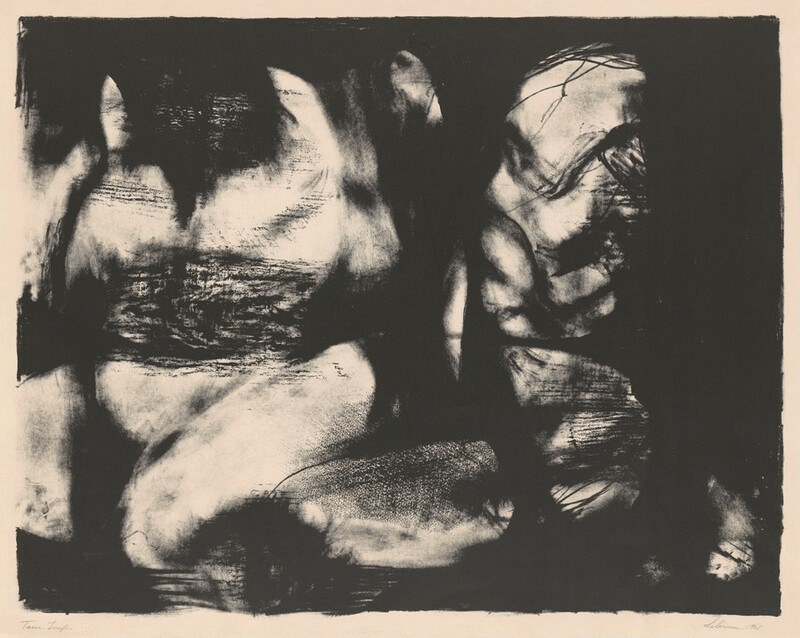
“Dark Figures” by Rico Lebrun, 1961, National Gallery of Art

A couple of years ago, I wrote a short story called “Maternity Leave” about a woman who, due to unfortunate circumstances, is alone in her apartment with her colicky newborn. With nobody to help her, sleep deprivation devolves into madness, while a neighbor stalks and threatens her because he’s tired of hearing the baby cry.

This was one of those stories I thought would never find a home. It got rejected 25 times (plus 7 non-responses). This summer, the stars must have aligned, because it got accepted twice in the span of 24 hours: for a horror anthology and for a podcast. Maybe it was the Lindsay Clancy criminal trial bringing renewed attention to postpartum psychosis. Or maybe it was just this story’s time to shine.

I often find myself writing about the horror of pregnancy and the postpartum period. My own experience of being pregnant was pretty cool: feeling the baby kick, anticipating what it would look like and so forth. But I wasn’t prepared, and maybe nothing can prepare you, for the extreme sleep deprivation that comes with caring for a baby who sleeps only an hour or two at a time for weeks on end. I’ve never feared for my sanity before that, and I might not be here today without the support of my husband and family. That baby is now a smart, beautiful, funny, capable 17-year-old, and still, nearly two decades later, I haven’t forgotten the fear I felt during that period (what if I really and truly lost it? Would I be aware of it? Would my baby be safe?).

My as-yet-unpublished novel, Gyre Island, touches on these themes, which I feel deserve more exploration in fiction generally, and in the horror genre specifically. What I experienced myself is far from the worst scenario I could imagine. So many horrors are unique to pregnancy. The terror of getting pregnant when you’re not ready. The visceral weirdness of watching your own body transform, of seeing a tiny footprint pressed into your skin from the inside. The fear that something could go wrong during pregnancy or childbirth, up to and including the death of your baby and yourself. The primal fury I and others feel toward politicians who would force us to gestate and give birth to a child even when the pregnancy resulted from rape. The torture of carrying a fetus that has passed away, waiting for nature to take its course while well-meaning strangers fawn over your belly and ask when you’re due. The fact that women are expected to grin and bear all of this without complaint, as if our fears don’t matter.

I’m not allowed yet to reveal where “Maternity Leave” will be published, but stay tuned!

Shout out to the critique group of the Horror Writers Association’s Chicagoland chapter, who helped me hone this story and shape it its devastating ending.

New Story: “The Window-Room”

I have a new story out in the world. “The Window-Room” appears in the June 2025 issue of parABnormal Magazine (Hiraeth Publishing). Unlike many of my stories, this one is personal. It’s a fictionalized version of a family ghost story.

Here’s the facts. My mother’s Aunt Marie wasn’t really her aunt. Marie was a cousin, but she had been raised as my grandmother’s sister. Why? Because Marie’s own mother had died in the 1917-1919 influenza pandemic, leaving behind six children, including three-year-old Marie and a baby girl. Nobody’s sure why Marie went to live with her cousins while her five siblings stayed with their father (who remarried). Everyone involved has passed, and we’ll never know what secrets they took to their graves.

But of course there’s more to the story.

When Marie’s mom died of influenza, her sister and mother called the Italian undertaker. Brooklyn was chock-full of Italian immigrants in 1919, but there was only one undertaker that the family trusted. Maybe it was because he spoke Italian, or perhaps he was a friend. In any case, he only visited their neighborhood once a week.

The dead woman’s mother and sister sat in a room with the baby girl, discussing their dilemma: Should give the baby to the undertaker along with her mother? The baby was alive, but she was sick with the influenza too, and everyone thought it might only be a matter of time. While they sat talking it over, the cradle flipped, tipping the baby out (unharmed) onto the floor. Nobody was standing anywhere near the cradle at the time. The women took it as a sign that they should keep the baby and not give her up to certain death.

This is the only story like this that I’ve ever heard in my family. To my knowledge, nobody on that side had a reputation for drama or tall tales. I have no reason to believe they weren’t telling the truth about what happened in that room. Some things are simply beyond our comprehension, too mysterious for us mere mortals to understand.

I asked Mom: “What was her name? Marie’s mother, the one who died?” Mom didn’t know. We asked other family members. They didn’t remember. I looked at the family tree that my mother’s relatives had created on Geni.com years ago. There was a pink rectangle for this mystery mother, but no first name.

Well. Being a mom myself, who’s lived through a pandemic (though a less harsh one than the epidemic 100 years ago), the thought of dying and leaving my young children behind horrifies me, as it must have horrified her. I thought of how she likely suffered in her final days, mental anguish compounding physical pain. If I could do one thing to honor her, it would be to search through records until I found her name.

Days later, after deep dives through steamship passenger manifests, birth records, marriage certificates, cemetery photos, census ledgers (handwritten in cursive, with many names misspelled), and New York City historical websites, I found her.

The evidence was sufficient beyond reasonable doubt, but I needed to be just a little more sure. When she heard the name, Mom nodded. She told me it lined up with naming traditions for daughters at that time, who were often named for grandparents. She called up one of her cousins, Marie’s son. He couldn’t recall his biological grandmother’s name (not terribly surprising, as the only grandmother he had known was his adoptive one). He said, “Mom told it to me once, a long time ago. It sounded real Italian.” My mom told him the name. “Yes!” he said. “That was it!”

I used her real name in this story: Michelina. Most of the rest is my own imagining of how her life might have been. I hope she’s at peace, and that she can somehow see that her children’s children thrive, even if her own view through the window-room has closed.

Blog at WordPress.com.

Up ↑