With spooky season in full swing, it’s time for a sweet little tale of obsession and death!
My story Matters of the Heart appears in today’s issue of the Doubleback Review. Doubleback Review is an online magazine that promotes creative writing originally published at places that went defunct (like Short Story Town, which originally published this story in November 2021).
I like to think this story has a “tragic ballad” feel to it. If I had musical skills, I’d strum a banjo and pen a mournful mountain tune of Henry Cadogan and his ill-fated love for a beautiful stranger. (RIP Dolly Parton, who excelled at writing this type of song.)
In my opinion, Doubleback Review’s mission is pretty cool. Why should a story be published only once, when stories are forever? From their website:
In a churn and burn culture, to revisit and reflect is a luxury. Doubleback Review wants to hit the pause button on art that may slip from the public’s eye (and therefore lose its potential for connection). It wants to resurrect your retired darlings, your dead art, your beautiful zombies — pieces that, like rare and precious artifacts, are worth dusting off, airing out, and putting out on display.
Thanks, Doubleback Review, for breathing new life into this beautiful zombie of mine.
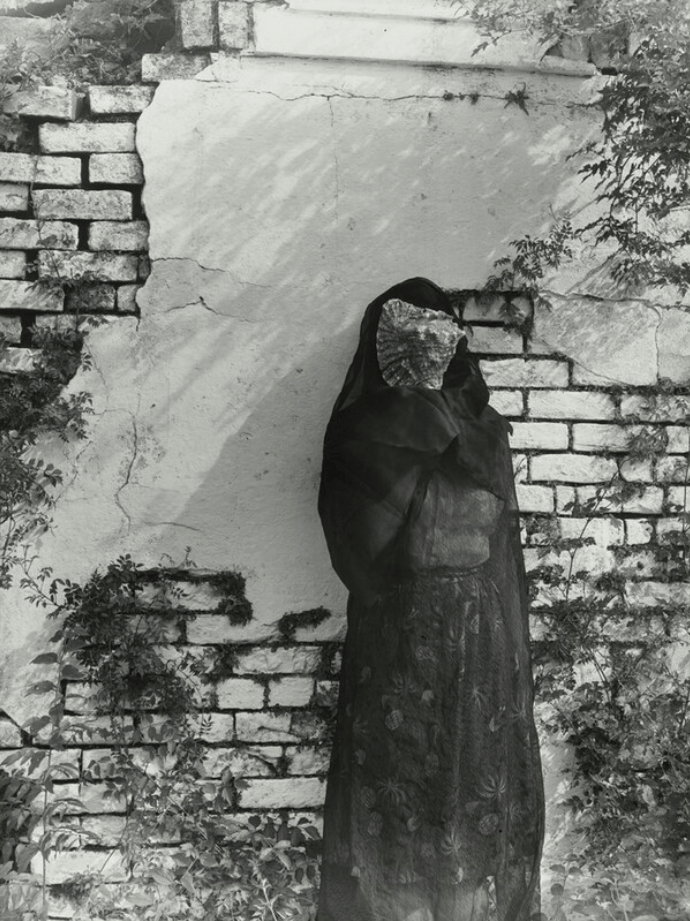
Untitled by Clarence John Laughlin (1945), National Gallery of Art
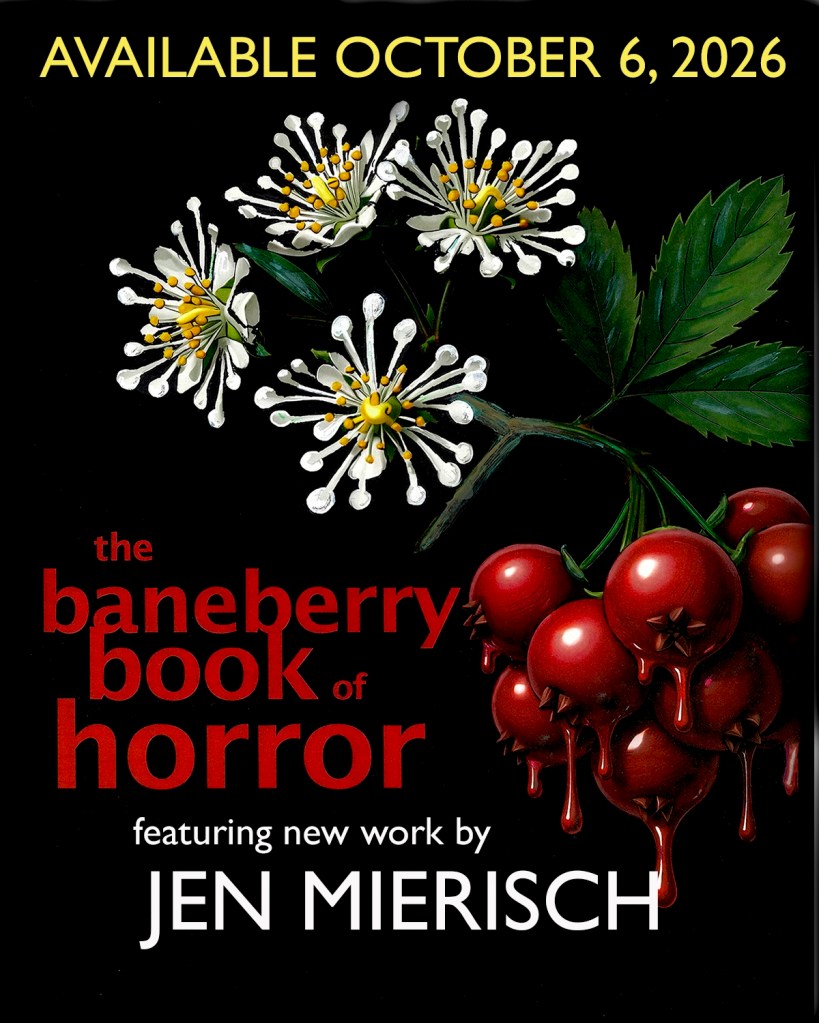
I’m thrilled to have my story “Maternity Leave” in the brand-new Baneberry Book of Horror from Baneberry Lit. The book’s official release date is October 6, but you can pre-order it at BN.com. Grab yourself a copy for some early Halloween treats!
My story is a tale of stalking, isolation, and madness, set mostly in a single bedroom where my protagonist devolves amid endless surreal hours alone with her newborn (and the angry neighbor next door).
What are baneberries, you ask? Juicy, poisoned delights, naturally!
baneberry noun : any of several perennial herbs (genus Actaea) of the buttercup family having acrid poisonous berries also : one of the berries
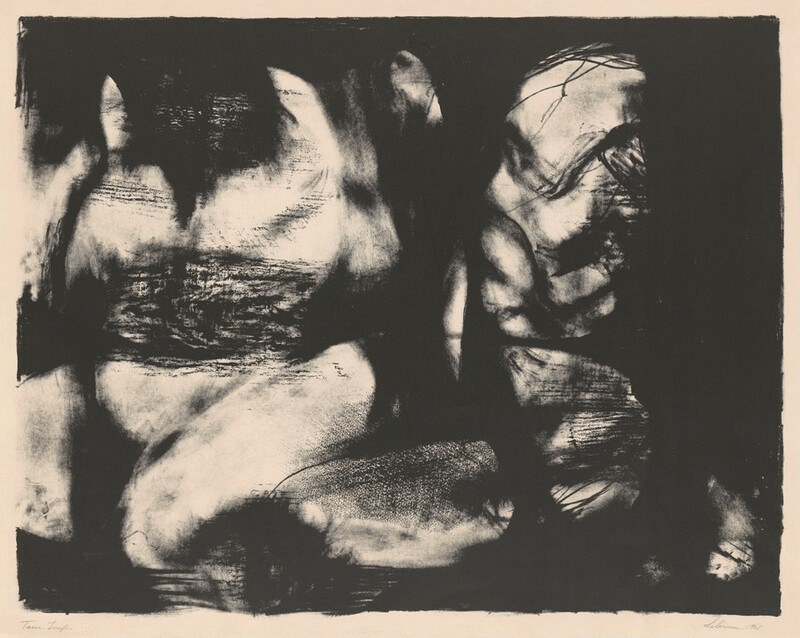
“Dark Figures” by Rico Lebrun, 1961, National Gallery of Art
A couple of years ago, I wrote a short story called “Maternity Leave” about a woman who, due to unfortunate circumstances, is alone in her apartment with her colicky newborn. With nobody to help her, sleep deprivation devolves into madness, while a neighbor stalks and threatens her because he’s tired of hearing the baby cry.
This was one of those stories I thought would never find a home. It got rejected 25 times (plus 7 non-responses). This summer, the stars must have aligned, because it got accepted twice in the span of 24 hours: for a horror anthology and for a podcast. Maybe it was the Lindsay Clancy criminal trial bringing renewed attention to postpartum psychosis. Or maybe it was just this story’s time to shine.
I often find myself writing about the horror of pregnancy and the postpartum period. My own experience of being pregnant was pretty cool: feeling the baby kick, anticipating what it would look like and so forth. But I wasn’t prepared, and maybe nothing can prepare you, for the extreme sleep deprivation that comes with caring for a baby who sleeps only an hour or two at a time for weeks on end. I’ve never feared for my sanity before that, and I might not be here today without the support of my husband and family. That baby is now a smart, beautiful, funny, capable 17-year-old, and still, nearly two decades later, I haven’t forgotten the fear I felt during that period (what if I really and truly lost it? Would I be aware of it? Would my baby be safe?).
My as-yet-unpublished novel, Gyre Island, touches on these themes, which I feel deserve more exploration in fiction generally, and in the horror genre specifically. What I experienced myself is far from the worst scenario I could imagine. So many horrors are unique to pregnancy. The terror of getting pregnant when you’re not ready. The visceral weirdness of watching your own body transform, of seeing a tiny footprint pressed into your skin from the inside. The fear that something could go wrong during pregnancy or childbirth, up to and including the death of your baby and yourself. The primal fury I and others feel toward politicians who would force us to gestate and give birth to a child even when the pregnancy resulted from rape. The torture of carrying a fetus that has passed away, waiting for nature to take its course while well-meaning strangers fawn over your belly and ask when you’re due. The fact that women are expected to grin and bear all of this without complaint, as if our fears don’t matter.
I’m not allowed yet to reveal where “Maternity Leave” will be published, but stay tuned!
Shout out to the critique group of the Horror Writers Association’s Chicagoland chapter, who helped me hone this story and shape it its devastating ending.
I also don’t use it to edit, brainstorm, summarize, or for any other purpose related to writing.
The amount of AI involvement in anything you see on this blog, or in any of my published writing, is, and always will be, zero.
I write because I love writing. I’ve loved it since I was a kid, and I will always love it.
I’m not in this for the money. Even if I were, I still wouldn’t use AI, because why should someone pay money to read something I couldn’t be bothered to write?
There are, of course, many reasons not to use generative AI. It was trained on stolen intellectual property (including my own work and that of many other writers). It’s bad for the environment (data centers use water that we need elsewhere and ruin quality of life for their neighbors). It’s untrustworthy, prioritizing task completion over accuracy.
But most importantly, generative AI is exactly as its name states: artificial. Writing, and all forms of art, are most impactful when they communicate real human emotion and experience. A robot can’t do that. It can only fake it. I only have so many years on this earth, and I’m going to live them authentically.
Recently I’ve had two microfiction stories published with 100-Word Fiction. Both are free to read, and both have accompanying audio recordings if you prefer to listen.
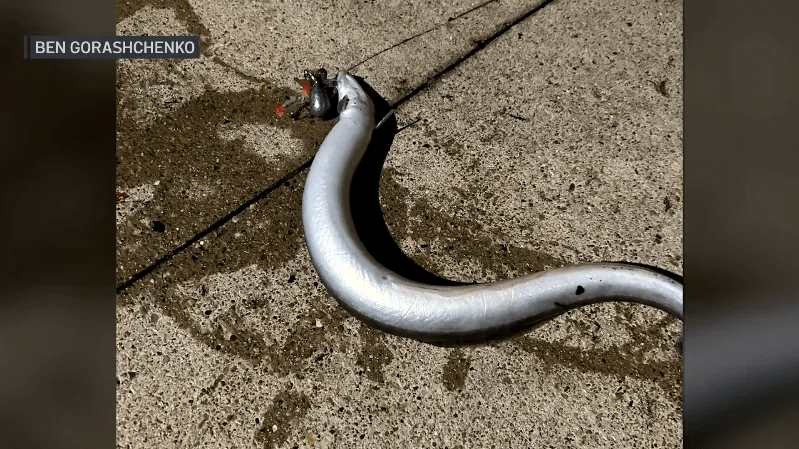
Several local news outlets reported on the catch, because it’s kind of a big deal. It means good things about the health of Chicago’s once-polluted waterways. American eels are born in the North Atlantic ocean, and those suckers travel for years and years, miles upon miles, through the Great Lakes and other waterways, to reach their ultimate fresh-water destinations. According to Friends of the Chicago River, the Great Lakes population of American eels had declined more than 90% over the last 50 years due to habitat loss, dams, and overfishing. Now it might be coming back.
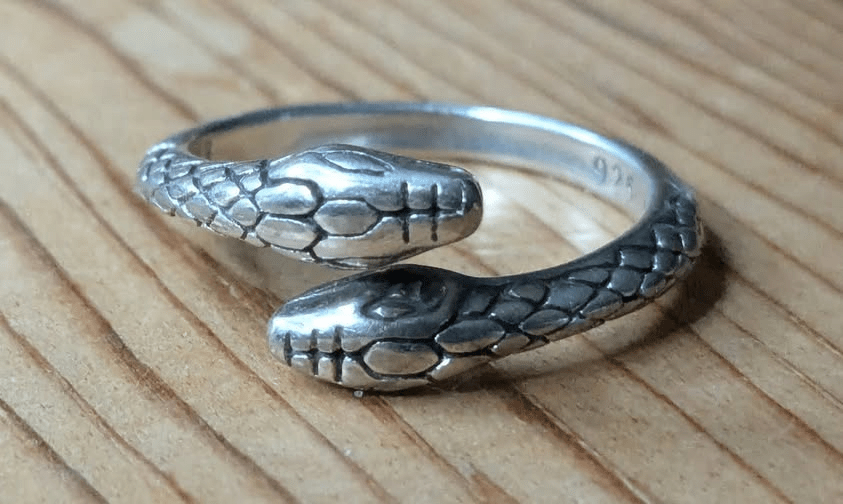
While writing “The River’s Revenge,” which appeared in Red Line: Chicago Horror Stories, I searched for the perfect critter to get caught in an underwater trap and scare the bejesus out of the people who found it. I quickly settled on eels, but my fictional eels’ two-headedness came later, when a song randomly led me into a store that sold me this ring:
That’s how creativity flows sometimes. You take inspiration from what you find around you.
Anyway, fisherman Ben Gorahschenko’s eel had only one head. But he threw it back to swim another day. So the next time you’re kayaking, pontoon-boating, or taking an architecture tour, keep an eye out. You might see one of these wiggly creatures yourself, and if you feed it some neon-green relish from your Chicago-style hot dog, who knows what could happen.
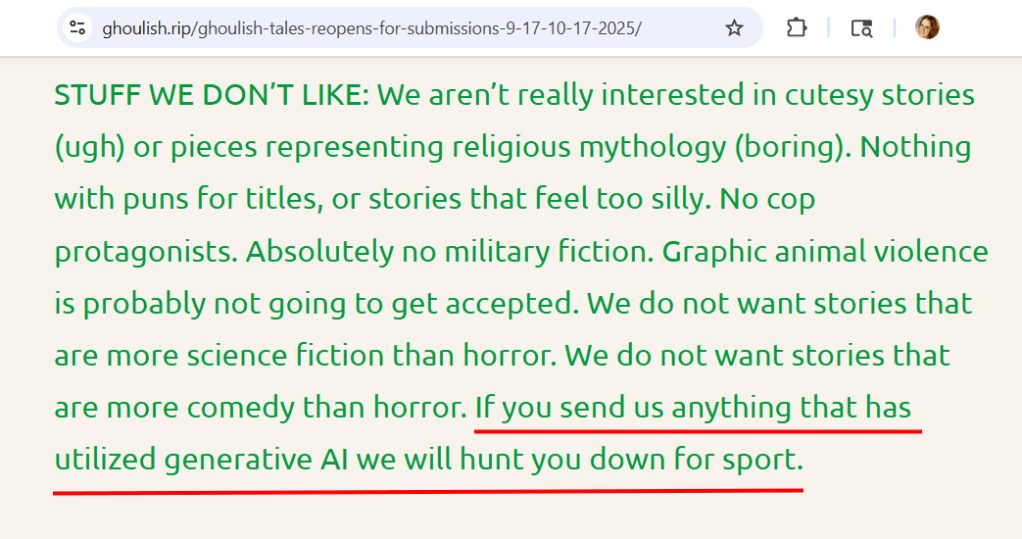
I adore it when publishers wax creative about their utter disdain for people trying to pass off AI-generated writing as real creative work. Exhibit A: Ghoulish Tales declaring that gen-AI “writers” will be hunted down for sport.
Here are three more for the hall of fame.
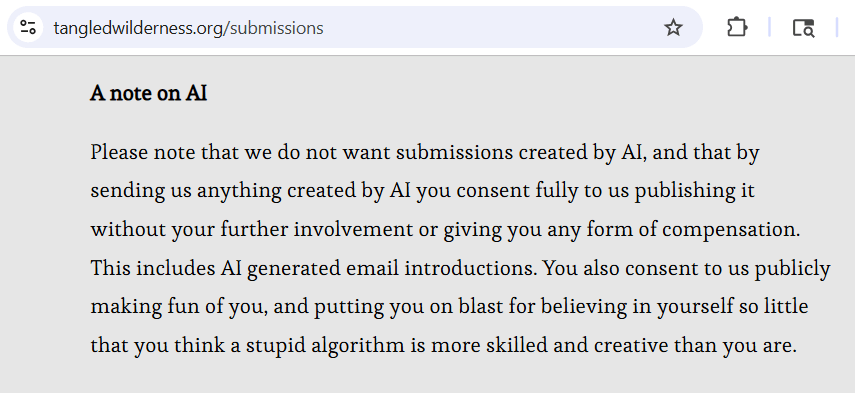
Tangled Wilderness rightfully points out that generative AI material cannot be copyrighted, so you shouldn’t get mad if they blast your “writing” all over the internet:
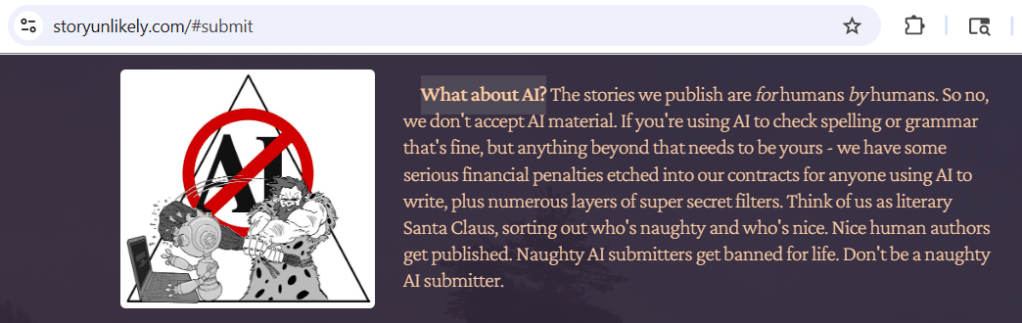
Story Unlikely goes so far as to charge penalties for the use of generative AI:
And Sometimes Hilarious Horror (RIP) invited the clankers to F off and establish their own publishing space:
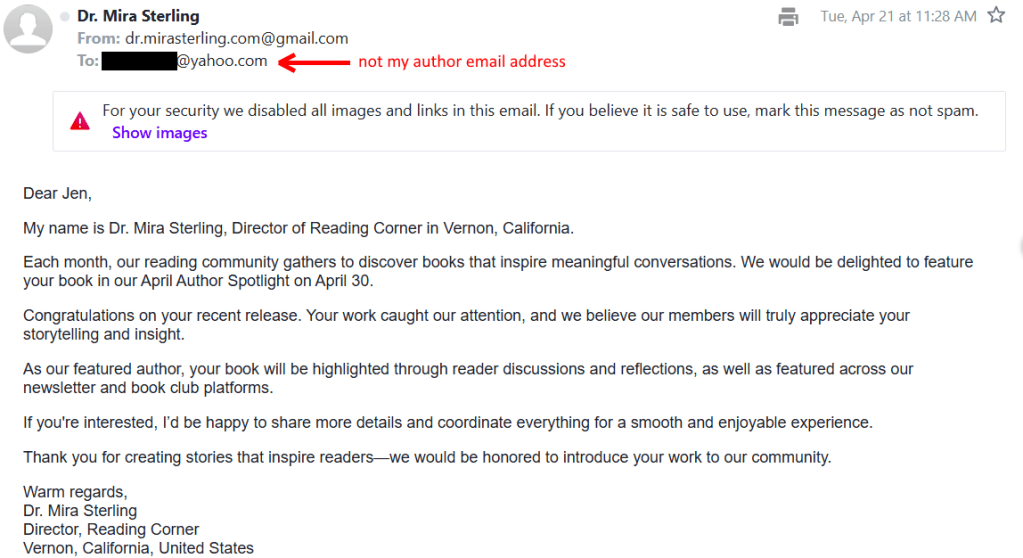
Well, it finally happened. After writing and publishing fiction for 7 years, I’ve evidently become “big” enough to be the recipient of one of the infamous author scams! I don’t know whether to gag or be flattered. I’ll settle for a giant eye roll with a side of giggles.
This is the one where they congratulate you on your recent book (while never mentioning it by name), invite you to have your book in their nonexistent book club (easily verifiable by an internet search), then presumably try to get money out of you for some sort of join fee (I’m not about to click through to find out).
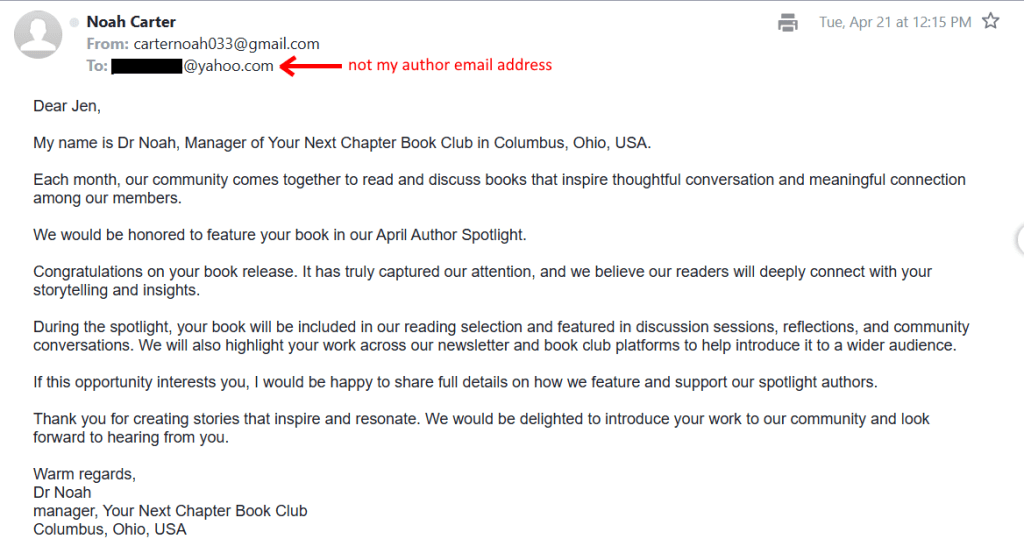
But even if I’d been tempted to believe the above email was legit, that fantasy would likely have evaporated when I received an almost identical email 45 minutes later:
I can only assume these scammers also target creatives in other fields (art, music). The solicitations are all alike: written in such a generic way that they’re likely AI, heavy on flattery, and light on specifics.
Please don’t fall for these. They’re like any other spam email, aiming to take your money and run. The only difference is that these particular scams are tailored to take advantage of writers’ egos. I like to think I’m humble and lack an ego, but that would be a lie.
Joke’s on you, “Dr. Mira Sterling” and “Dr. Noah,” because I don’t even have a book (yet). Ha!
Shout out to Yahoo Mail. It might be the dinosaur of email providers (second only to AOL), but it’s got a spam filter acute enough to correctly flag these bogus emails.
It should surprise nobody that creative writers, and most publishers, aren’t fond of the use of generative AI to create fiction. We got into this because we love writing, not because we wanted to outsource it to robots. We tend to be vocal in our distaste, sometimes strident, often colorful, because we are artists, not purveyors of sad beige prose.
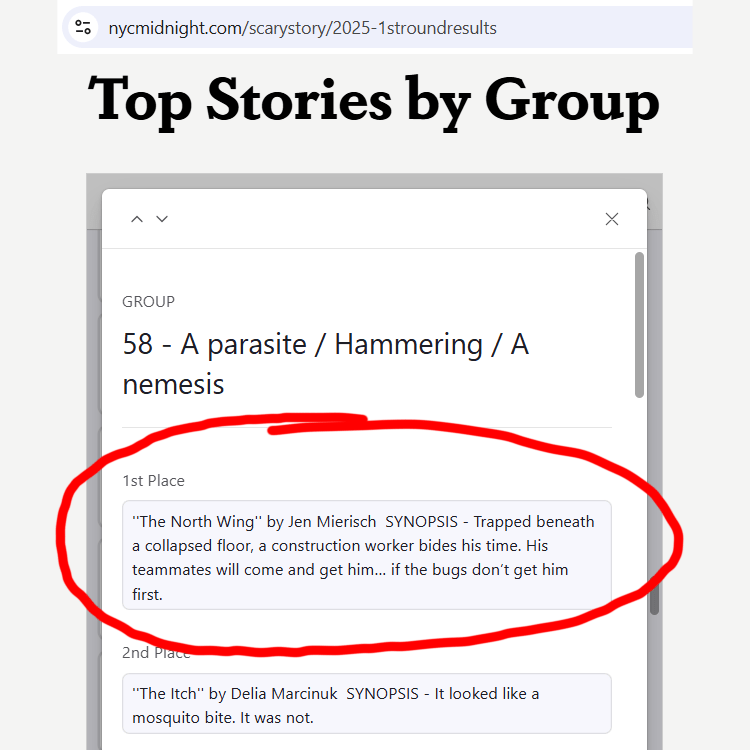
Now that’s a way to start the new year off right! Thank you, NYC Midnight judges, for ranking me first in my group in the Scary Story Challenge. I’m glad my bug story creeped you out. And I’m certain that’s not a beetle that you feel crawling up your leg. Just a stray hair, surely.
This result is from Round 1 of a 3-round contest. If you’re looking for writing competitions with good prompts to get your started, I highly recommend NYC Midnight, which also runs contests for screenplays, short stories, rhyming stories, and microfiction.